
A Closer Look at the Operational Side of Social Commerce
Discover how fast-paced buying, high return rates, and viral demand spikes are changing the social commerce game and learn strategies to optimize operations to ensure that brand scales smoothly and remains competitive
June 26, 2025
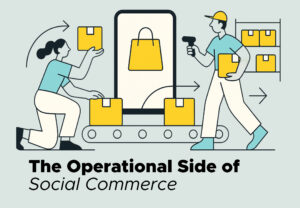
Social commerce has become more than impulse buys on Instagram or TikTok. As the space matures, social commerce operations, ranging from inventory integration to creator fulfillment and customer service, are becoming critical to its success. In 2025, sales through social networks accounted for an estimated 17.11 percent of total online sales. This figure is only expected to continue growing in the coming years.
While brands focus on clicks, content, and conversions, there’s something just as important that often gets ignored: operations. Things like returns, fulfillment, and logistics might not be the most exciting parts, but they really matter. If the back-end fails, it hurts the brand’s reputation. Let’s take a look at what’s working and what’s not in the operational side of social commerce and what you can do to make a difference.
Social Commerce Operations Are Different and How
With traditional e-commerce, customers get time to think. They can browse, compare products, and might leave items in their cart before returning later. But social commerce? It’s all about quick decisions. One minute someone is scrolling through Instagram, spots your product in a story, and the next minute they buy it right away. No time for research or second-guessing. Just a fast purchase.
This brings up three major challenges:
🛍️Volatile Sales: Your sales can shoot up overnight if your product goes viral. One week, you might ship 50 orders and the next it could jump to 2,500 because an influencer gave it a shout-out.
🚀High Expectations: Customers expect top-notch service like what Amazon offers. They want same-day shipping, easy returns, and neat packaging, but you might not have the same setup as an e-commerce giant.
📱Platform Differences: Each platform has its own rules and demands. What works on TikTok Shop might not cut it on Instagram Shopping.
Returns Reality: Trickier Than You Think
Social commerce has a bit of a problem: return rates are higher than in regular online shopping. Why? Well, people often buy things on impulse and don’t always know what they are really getting. That cute dress might look great in that 15-second TikTok video, but when it arrives, it’s not what they expected. The main problems are size guessing (no detailed product pages), color differences (social filters distort reality), and buyer’s remorse from quick purchases.
➡️ Strategic Move
Streamline returns by enabling customers to initiate them directly via WhatsApp or Instagram DMs. Offer instant store credit within 24–48 hours to retain revenue and boost repurchases. Rigorously track return reasons to quickly fix recurring issues.
Logistics: The Make-or-Break Factor
Social commerce logistics aren’t merely about moving boxes, they are about keeping promises made in viral videos. Speed expectations are brutal such as same-day processing, 2-day delivery, real-time tracking. The challenge is geographic spread when content goes viral across multiple regions simultaneously. Most brands fail by trying to serve everywhere immediately.
➡️ Strategic Move
Start in 2–3 metro cities, perfect operations, then expand gradually. Partner with local carriers for cost efficiency and agility. Use packaging, delivery alerts, and logistics data to turn each order into a driver for UGC, re-engagement, and geo-targeted growth.
Fulfillment: The Hidden Warnings
Relying solely on centralized warehousing can’t cut it anymore for businesses trying to keep up with the unpredictable nature of social commerce. Sometimes, orders can spike 10x overnight due to a viral trend. When you are selling single items, the cost per unit can go up, and you have to think about how to package items based on where they are being sold. Then you have to deal with scattered inventory across different platforms, the demand for same-day processing, and global shipping because of content reaching audiences everywhere.
➡️ Strategic Move
Build a surge plan with 3PL backups ready to activate within 24 hours, handling up to 30% of orders. Decentralize popular inventory to local hubs for faster delivery. Explore creator-fulfilled inventory to add authenticity and drive scarcity.
Building Operations That Scale
A common mistake brands make is setting up their operations for their current size instead of their potential size. Social commerce can really boost your business quickly, so you need to be prepared for that kind of growth.
– Start by being flexible: Pick fulfillment partners and systems that can grow with you. Try to avoid long-term contracts that lock you into certain amounts or services.
– Think about peak capacity: Your operations should be ready to manage five times your usual volume without falling apart. It might sound like overkill, but social commerce can cause sudden spikes in demand.
– Build redundancy: Have backup plans in place for fulfillment, inventory storage, customer service, and payment processing. Things move fast in social commerce, and you don’t want to be caught waiting for solutions when something goes wrong.
Remember, brands can no longer afford to treat fulfillment, returns, and logistics as backend concerns.
Latest News ☕
The evolution of social media: How early platforms shaped today’s digital landscape
February 28, 2026
Tumblr walked so Pinterest could run - and so did more platforms. We identified the early ...
Which paid amplification strategy actually works in 2026?
February 26, 2026
Influencer whitelisting and TikTok Spark Ads both transform creator content into paid adv...

When user-generated content stops feeling authentic – and what to do instead
February 21, 2026
The polished "casual" aesthetic of branded user-generated content has become so ubiquitous...